

Overview of Our Research
Foundation Models
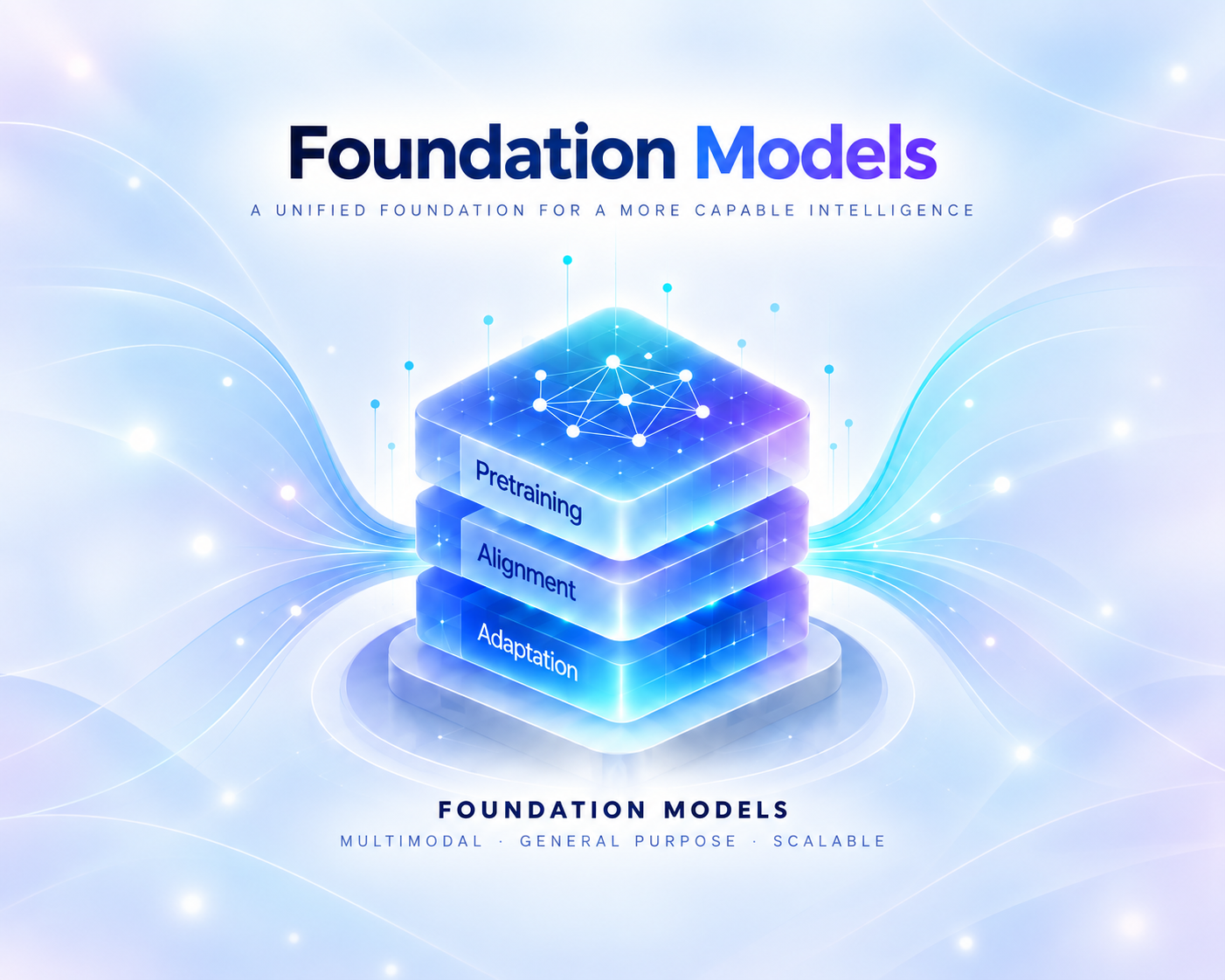
Foundation Models aim to provide broadly capable and transferable intelligence by learning general representations across large-scale data, diverse modalities, and complex tasks. Advances in this area are pushing AI toward stronger perception, reasoning, adaptability, and efficiency.
Read More ➝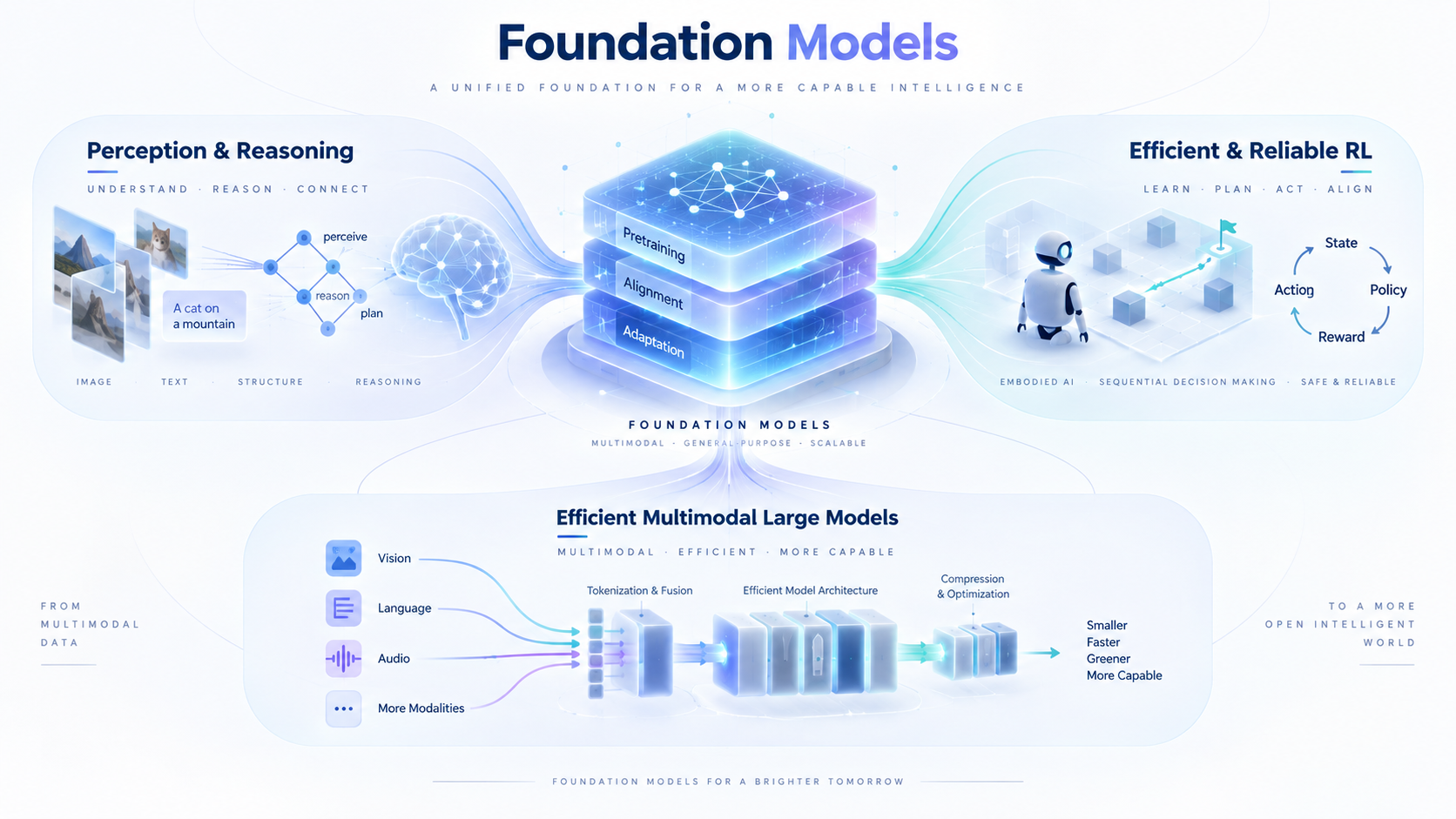
1. Perception and Reasoning
Foundation models for robust perception, understanding, and reasoning in complex multimodal environments. Key topics include compositional reasoning, multimodal understanding, and generalization across diverse tasks and domains.
2. Efficient and Reliable Reinforcement Learning
Reinforcement learning methods that improve sample efficiency and reliability in complex, long-horizon decision-making scenarios. Emphasis is placed on scalable learning algorithms, robust policy optimization, and the integration of reinforcement learning with foundation models.
3. Efficient Multimodal Large Models
Efficient architectures and learning paradigms for large multimodal models spanning language, vision, and other modalities. The focus is on reducing training and inference costs while preserving strong perception, reasoning, and generalization capabilities.

Embodied AI
As artificial intelligence systems increasingly interact with the physical world, the field of Embodied AI focuses on developing agents that can perceive, reason, and act within dynamic environments.
Read More ➝1. Long-Horizon Planning and Manipulation
Embodied agents capable of planning and executing complex, long-horizon tasks in dynamic environments. Core topics include high-level reasoning, task planning, and low-level manipulation for robust and generalizable robotic behavior.
2. World Perception
Perception systems that enable embodied agents to construct rich and actionable representations of the physical world. Research topics include spatial understanding, scene and object reasoning, and multimodal perception for interaction in open-world environments.
Efficient AI
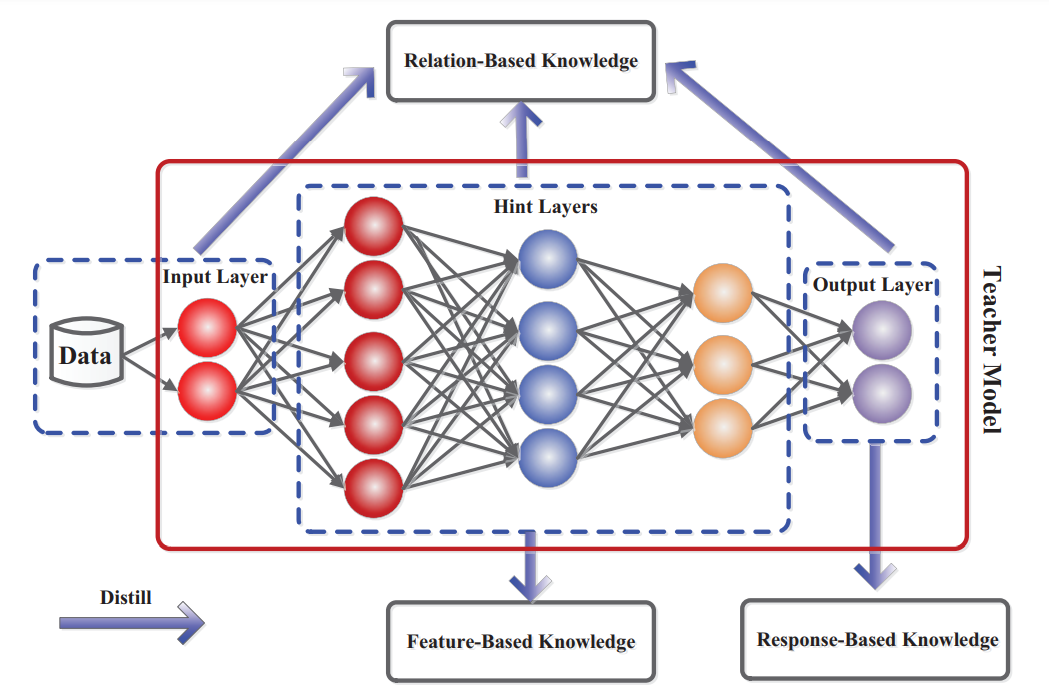
Efficient AI addresses the critical challenge of maximizing model performance while minimizing computational cost, energy consumption, and memory footprint.
Read More ➝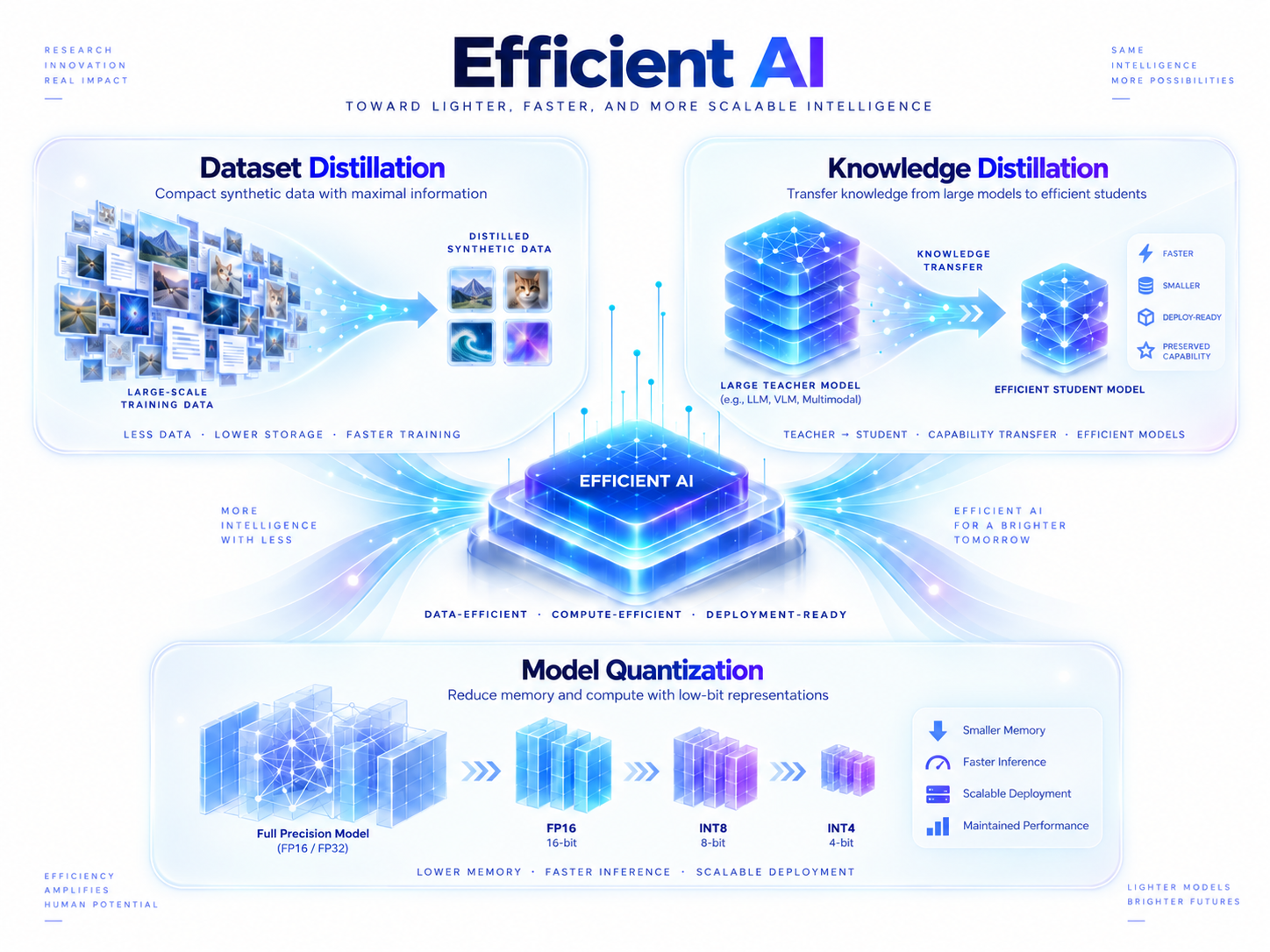
1. Dataset Distillation
Dataset distillation methods that compress large-scale training data into compact and highly informative synthetic datasets. The objective is to reduce data, storage, and training costs while retaining strong downstream performance and transferability.
2. Knowledge Distillation
Knowledge distillation techniques for transferring capabilities from large models to smaller and more efficient ones. Key directions include effective knowledge representation and transfer across architectures, modalities, and tasks.
3. Model Quantization
Model quantization techniques that reduce the computational and memory footprint of modern neural networks. The focus is on efficient training and deployment with minimal performance degradation across large language, vision, and multimodal models.
Advanced Computing Architectures
As modern artificial intelligence systems continue to scale, traditional computing architectures are increasingly constrained by efficiency, latency, and energy consumption.
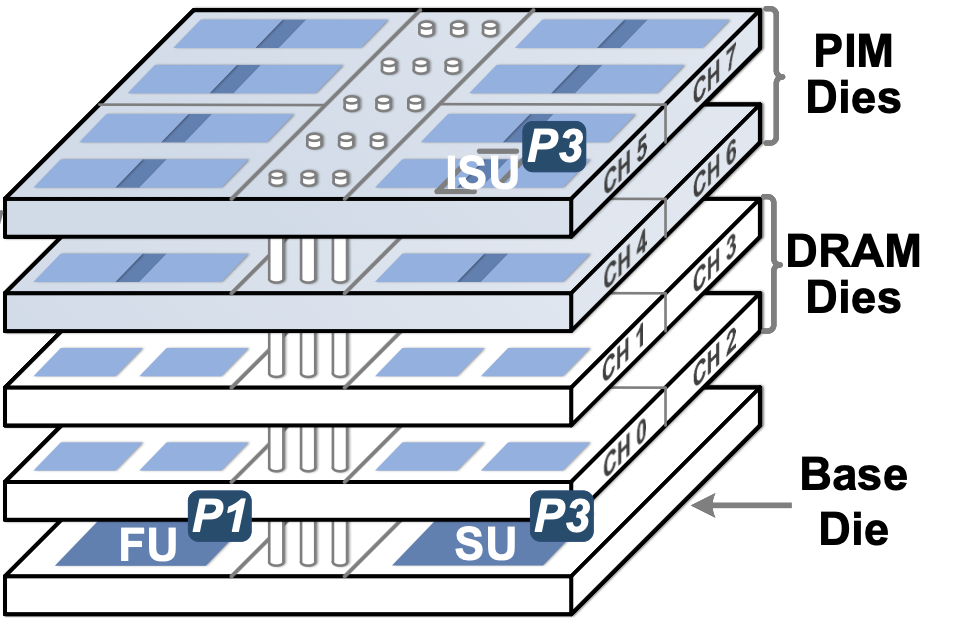
Read More ➝Emerging computing architectures aim to fundamentally balance the interaction between algorithms, hardware, and systems, enabling efficient and scalable execution of deep learning and large language models across cloud, edge, and resource-constrained platforms. Our research explores architecture–algorithm co-design paradigms that bridge theoretical model advances with practical hardware realizations.
Deep Learning and LLM Accelerators
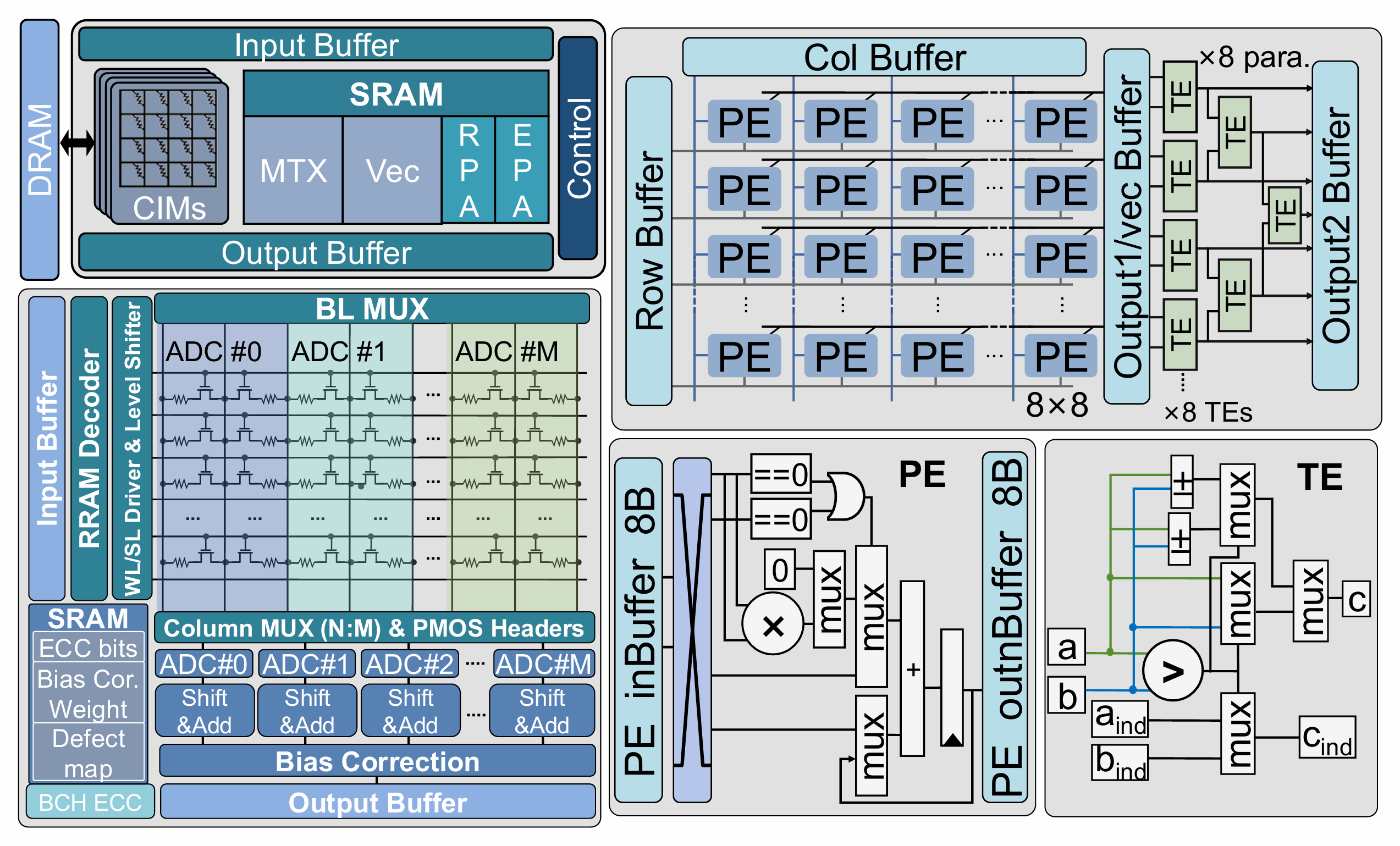
While deep learning and large language models have demonstrated remarkable success across a wide range of real-world applications, their rapidly growing computational and memory demands pose significant challenges to conventional hardware platforms. Most existing models are designed with limited awareness of hardware constraints, leading to inefficiencies in performance, energy consumption, and scalability. To address these challenges, we focus on the co-design of hardware-friendly model architectures and specialized accelerators, alongside system-level optimization techniques for efficient deployment. Our research spans accelerator microarchitecture, dataflow optimization, and software–hardware interfaces, aiming to enable high-performance and energy-efficient execution of deep learning and LLM workloads, particularly for edge and embedded environments.
In-Memory and Near-Memory Computing
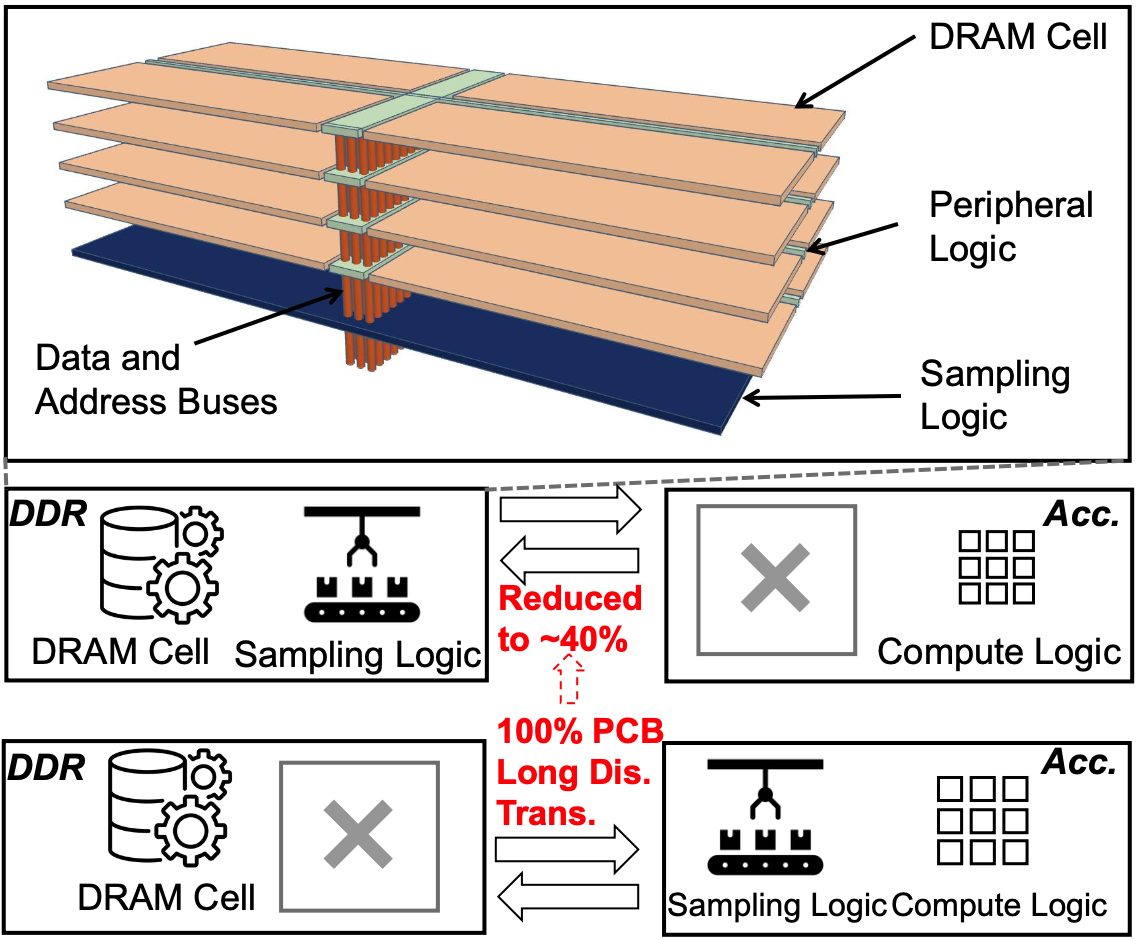
The increasing dominance of data movement costs has exposed fundamental limitations of the traditional von Neumann architecture, especially for data-intensive AI workloads. In-memory and near-memory computing paradigms seek to alleviate this bottleneck by tightly integrating computation with memory, reducing data transfer overhead and improving energy efficiency. Our research investigates compute-in-memory architectures, mixed-signal and digital designs, and algorithm–hardware co-optimization strategies, with a particular emphasis on neural network inference and learning. By exploring novel memory devices, architectural abstractions, and system-level integration, we aim to unlock new pathways toward scalable and efficient AI computing beyond conventional architectures.